The Tao of Movement | Zuna Vesan Kozánková


 Spotify
 Apple Podcasts
 Podchaser
 Podcast Addict
 Amazon Music
 Overcast
 Castbox
 RSS Feed
 Growing up in Malaysia within a traditional Chinese household, I realized that I knew very little about my own cultural roots. This wasn’t due to any lack of guidance, but rather a subtle drift — a neglect of curiosity on my part. So when the opportunity arose to revisit and relearn, I stepped forward without hesitation.
That journey led me to Zuna Vesan Kozánková, a reservoir of knowledge who constantly bridged worlds — between East and West, science and spirituality, movement and medicine. In 2024, Zuna published The Tao of Movement, a remarkable book for anyone working with the body — from dancers and performers to therapists, athletes, and movement practitioners. Developed through projects such as Dance and Medicine and Dancing Qigong, it reflects a lifelong inquiry into how movement can be both expressive and healing. At the heart of her practice lies a simple yet profound idea: that movement is not just mechanical, but intelligent.
In this final full-length episode of The Background Dancer, I sit down with Zuna to explore these ideas — to reflect on dance, spirituality, and the ever-narrowing gap between Eastern and Western movement philosophies.
Soundtracks:
- Birds - Tyler Twombly
- Poison Ivy Yard Work - Uncle Milk
- Soft Background Music - FreeMusicForVideo
Like our offers?
- S2 Summer SALE!
- Check out our new Dance Masterclass YouTube review
- Sign up for Dance Masterclass
- Choreographing Your Dance Career by Janaea Rose Lyn
- Try Nord VPN
Like what we do? Help us grow by
- Visiting The Background Dancer
- YouTube Channel
- Rate and review here
- Email me at backgrounddancer.jy@gmail.com
- Answer a survey
- Sign up here to receive future updates
- Leave a thought on Facebook and Instagram
- Join the Facebook group and introduce yourself as a member of our community
SPEAKER_00
Technique is one important thing, but also being connected with the body, with own body is important. Many dancers don't know their own bodies. Like really no. They don't understand the bodies. They use the bodies, but they don't understand it, which is quite um horrible, isn't it?
SPEAKER_01
Hello and welcome to the Background Dancer. I'm your host, Jason Yup. Thank you for joining me with our community of passionate dance contributors from around the world and across different fields. In this podcast, I offer educational conversations and insightful tips to help you better understand all things offstage about this curious art form. Growing up in Malaysia within a traditional Chinese household, I came to a quiet realization much later in life that I knew very little about my own cultural roots. This wasn't due to any lack of guidance, but rather a subtle drift, a neglect of curiosity on my part. It wasn't until I entered the world of dance that fragments from that heritage began to reappear. Almost as if waiting patiently to be rediscovered. Encounters with practices like Tai Chi and Qigong stirred something deeper within me, a mixture of fascination and humility. I found myself standing at the threshold of traditions that had existed long before me, feeling both inspired and slightly embarrassed by how distant I had become from them. So when the opportunity arose to revisit and relearn these ancient systems of knowledge, I stepped forward without hesitation. That journey led me to Zuna Vesan Kozankova through my collaboration with Slovak choreographer and her husband Milan Kozanek. What began as a simple introduction soon unfolded into a conversation that bridged worlds between East and West, Science and Spirituality, Movement and Medicine. In 2024, Zuna published The Tower of Movement, a remarkable and deeply considered guide for anyone working with the body, from dancers and performers to therapists, athletes and movement practitioners. The book is the culmination of over 7 years of research, weaving together her extensive experience in dance with the philosophies of traditional Chinese medicine and Qi Gong. Developed through projects such as Dance and Medicine and Dancing Qi Gong, it reflects a lifelong inquiry into how movement can be both expressive and healing. Zuna's path is as layered as her work. A graduate of the Dance Conservatory and the University of Performing Arts in Bratislava, she expanded her studies across Europe and Asia, immersing herself in Chia Tzu, acupuncture, and energy-based practices. With over three decades of teaching experience, her work spans cities from Bratislava to Beijing, Vienna to Bangkok, each space shaped by her calm, attentive, and deeply intuitive approach to the human body. At the heart of her practice lies a simple yet profound idea that movement is not just mechanical, but intelligent, guided by energy, awareness, and connection. By integrating dance with the principles of Taoism, she offers a new lens through which we can understand the body, not as an object to control, but as a system to listen to. In this final full-length episode of the Background Dancer podcast, I sit down with Zuna to explore these ideas, to reflect on dance, spirituality, and the ever-narrowing gap between Eastern and Western philosophies. Welcome to another bonus episode of season 3, The Town of Movement. Hello there, Zuna. A wonderful welcome to the Background Dancer Podcast. It's so lovely to see you again after a couple of weeks, actually, after my recent collaboration with Milan himself. I know you're now situated in the wonderful mystical lands of the Eagle Mountains in the Czech Republic, kind of your second home, or maybe now your first home. And whilst I'm still back here in Banka Bistrica, it is such a lovely, lovely occasion because I'm going to emphasize this to everybody listening and watching this. You are potentially my final original episode I will ever do on the Background Dancer Podcast. And it's so, so fulfilling because you are Slovak. And I've been living in Slovakia for the last seven years, which means it is only right for me to draw an end to this chapter by interviewing and sharing the work of one of Slovakia's most renowned artists and someone who is for me a pioneer in her work. So, first and foremost, welcome and how is your day so far?
SPEAKER_00
Hi Jason. Well, uh it was quite long. Thank you. Thank you for inviting me. I'm very looking forward to chat about uh connection of dance and Chinese philosophy, and I'm very glad that you are Chinese and we can speak about this uh interfacing together. And well, I am here in the mountains, everything is white, snowy, sleepy, like winter is offering a sleepy time. So let's let's let's go on because otherwise I will fall asleep.
SPEAKER_01
And if you do, I wouldn't mind uh because one thing we need to remember is how to control our flow, our energy, which is definitely something that's going to come up a lot in this session. Now, this session is mostly so exciting for me because we are going to talk about a wonderfully written book which has basically headlined a lot of your work, and over the past how many years, I don't know. I mean, you have been this is basically your entire life's work. So I'm just gonna hold this up for everyone to see in in in place of my own face. This is the Tower of Movement, a wonderful, wonderful collection of all of your life's work, very nicely divided, compartmentalized, and organized into nice bite-sized sort of chapters and lessons with regards to basically the Tau of Movement. And what is so special about this book for me? Uh, it's it's it's really because this is your first ever English exclusive book, right? You've written quite a few already, and they're mostly in Slovak. Whereas this one is produced in English, originally written in Slovak, of course, but then later translated to English and will be later on translated to Czech. And that's also related to the markets that have an interest in the type of work that you are doing. Now, there's a lot to cover in this book, and we're definitely not going to go through every single detail because that's for the readers who are interested to actually go and maybe purchase the book and support your work and really uh develop maybe an interest in this kind of teaching, because I often crack this joke, and I know it could be boring, but it's so funny all the time when I think and meet both you and Milan. I work with Milan quite a lot as well. I've danced your work spaces when I was in Divalo Studio Danza, and you are so much more Asian than I can ever imagine to be, despite being super purely Chinese myself, right? And I'm going to continue to bang on this element because you know it's so rare to find you know Western people who have such an interest in Asian teachings. And it's as an Asian, of course, I really support that, but I also understand why the rarity is there because it's so difficult at the same time. These are teachings that are ancient, these are teachings that go so far back and are also slightly sort of religious in some ways. It's not just you know, sort of a philosophical doctrine or whatever, it's actually somewhat religious. So we're not going to get into all those things, but of course, you know, you are free to kind of reveal uh some of your ideas or some of your thoughts on that. What I do want to focus on mostly is the book itself in relation to your work. And before we begin and before we dive right into it, I also have to mention the amazing collaborators that are Singing Dragon, Handspring Publishing House, who have so so well supported your this wonderful project. And I've been in touch with the marketing heads, I think uh I think it was Sandra, her name is, who actually sent me the book and uh who actually uh I've been in touch with a long time actually regarding how to continue talking about this book, promoting this book, and I'm so happy that it ended up uh on this platform where I can basically use my knowledge of dance to share. Yes, I'm also with all yeah, go ahead.
SPEAKER_00
I'm very happy, I'm very happy it's it's you because we know each other from the dance projects, so so it's for me like talking about the book uh with my brother or something like this. Yeah, so it's not so it's not official, but uh very very close to you as a dancer. Yeah.
SPEAKER_01
Thank you so much. I'm honored to be able to share this book. And uh thankfully, before uh we even agreed to this collaboration, I've actually had some practice in my previous episodes doing book reviews, which is sort of a new practice of mine as well on this podcast. It it took some time to be able to get to understand how to do one. So I think this is probably my third one already, and uh hopefully not the last one. I don't know. Uh let's see. But okay, now with all that out of the way, I think one of a very nice way to maybe begin this journey diving into this wonderful book is just to kind of give people a teaser of what the Tower of Movement is all about, right? And I'm so fortunate to actually have been sent the physical version of this book, and so I'm gonna use this opportunity to actually read out some of your writings. And and one of the writings, it's not really part of the chapters yet, but I feel like it's something that maybe can give someone a good idea of what we're trying to talk about. And that is the only Asian person that I have seen in this book. I don't know how to say his name properly. Is it like Tao Tengming or something like that? He's one he's the author of 365 Tao, the Lunar Tao, Scholar Warrior and the Chronicles of Tao. I think a very close colleague of yours. And I would like to basically just read his, let's say his foreword or his review. Yeah, for the audience to kind of get a get a grasp of it. Okay. He says, quote, Dance is one of the purest human expressions of Tao. Dancers must know their own bodies and they must be able to heal when needed. Zuna Vesan has given us an erudite book that is profoundly steeped in dance, medicine, healing, culture, and nature. She testifies to a life of peak movement and reveals the spirit within dance, an essential book for dancers, martial artists, qigong practitioners, healers, and all who follow Tao. So really well written there, Mr. Tao. Hopefully I said your name right in Chinese as well. But this really gave me, you know, even as a reader myself of the book, a perfect window to kind of jump into this entire book. Now, I'm I've said enough. I want to throw this now to you and to kind of begin this journey, maybe with a very simple but maybe big question. I just wanted to know, Zuna, why Tao? I mean, why Tau? There's so many things in this world that could you could have, yeah, you could have chosen to kind of like gain such an interest and deep understanding of. But you know, Tao is very specific, right? I'm not sure what people know about it, but for example, let's say a very casual, you know, idea of it is that you have Buddhism, for example, on one hand, which is quite the most pop one of the most popular religions in let's say the Asian region or even here, some from somewhat in Europe, and then you have Tao, which is kind of like an extension of that or a sort of a breakaway from that, or something like that. So, why Tao, firstly, and then how have you been able to use that to become the dance artist that you are today? So, yeah, just give us a really kind of quick summary as an opening into your journey. Thank you.
SPEAKER_00
Well, I think I was born to this specific life to discover Tao, Taoistic philosophy, and I was also born to spread all this knowledge to as many people I I can. Yeah, and uh well when I was a child, I was always uh asking for what's the what's the reason of my life and how can I be happy and blah blah. I I couldn't understand how people can be ill so much, yeah, like yeah, health. I I was not I was interested in health topics, but uh I was mostly interested in prevention. So I was always looking for ways how to be healthy, how to be happy, without pills, without you, you know, without hospitals. And then when I started to dance, it was when I was eight years old. Yeah, it was always pushing the body and too much, too much, too much effort, and I liked dance a lot, but I didn't like this because I I I I I thought that this this is harming the body and this is harming the soul as well. Then I I studied at the dance conservatory, which we which was quite horrible because of the because of the because of the effort. And then um of course I I had some injuries, yeah, and thanks to these injuries, I really had to change something in my life, in my way of using the body, of course. And I met Milan, my husband, and he was, I think he's a reincarnated Taoist somehow, and well, he he opened me the the window to to this philosophy very gently, very very slowly. And well, first it was like I've been active in dance world more than 30 years, uh like active performer and dance teacher, more like 30 years, and I was always very much fascinated by movement body, yeah. Not only the beauty of movement body, but also the wisdom of the body. I think the human body is just is just amazingly perfect. How all the body parts cooperate together, sinews, joints, cartilage, bones, everything is really something raw, but in the same time can be transformed into the beauty, yeah, and emotions and so on, which we can see on the stage, dance performances. So I was uh because of I wanted to understand the human body, I started to learn to study anatomy, human anatomy, and then transformed this uh knowledge from the anatomy into the movement. So many years I was I taught the moving anatomy, which is like learning people, teaching people anatomy via movement, which was extremely interesting because people could could know where where is the spine and how the spine can be can be used. How the for example hip joints can be used in a very nice way, yeah. And then later on, maybe 25 years ago, I um I met on one dance festival, I met there a guy who who was doing shiatsu. It's a Japanese manual therapy, kind of massage, but it is based on Chinese medicine um theory and uh working with energy, working with meridians and energetical centers, and I was from the immediately I was like, okay, this is something what I somehow know from from somewhere, something very close to me. So I started to study this beautiful body art, Xiao, and then later, maybe 17 years ago, this study was followed by my study of Chinese medicine acupuncture. So I was really full of this information, and it was beside my dance career. So I was dancing, teaching, performing, and uh and studying these things. So it was a great platform to interface these two fields, dance or movement, and uh principle of Chinese medicine. So because I didn't want to keep these Chinese medicines, medicine ideas in the books and in my head, I wanted to put it into my body, yeah, which actually is very logical and very natural. Because, for example, when we imagine Qigong on or Tai Chichuan or martial art, we can see the Chinese Taoistic philosophy like incarnated into the body, into the body movement. So this is something very interesting for me because you were asking about why Tao, why Taoism. For me, Tao as the as the original Chinese idea or Chinese way of living or religion, it could be also in this way. This this uh Taoism can be practiced and is practiced through body, through human body. It's not only in the mind or in the in the spiritual spiritual way put here, but it's really can be can be applied into body. So that's why I I started to do movement research. Maybe 10 years I was researching how how these principles can uh can be applied into dance, dance and not only dancer for dancers, but whatever movers, how this can be applied for their profession and so on. So I was doing many workshops, like the whole year workshops, like cycle of workshops, where we were working with uh meridians via improvisation and blah blah. So I was testing through this this work, it was international, many students from the whole work. I was testing how these uh principles can co-work with dance and how they how dancers and whatever movers can benefit these ideas. So, and this was the base for my book.
SPEAKER_01
Wow, okay, yeah. I mean, that's uh really nicely summarized there. I know it's been and has been a long journey. Like I said, we're talking about your life's work, right? And I mean, uh for someone like me, I'm like 33, I I think I I'm not at the stage where I can still kind of focus entirely on one thing and one thing. Only. I mean, there are people that can actually really do that. I'm I'm very like, I don't know, I'm multi, kind of hyper in that sense. Like, I want to do many things at the same time. I'm multitasker. So I have many different interests. And I think if there is one thing that just like you, if there is one thing that you I would completely just kind of dive into and research, is the research of how to do many things at the same time. And that that is that is a that is just you know sort of a reflection of what it takes to kind of put your entire life into a particular type of study. And I think this study is so important and so significant because, like you said, it ties in very naturally with something that you've already been doing since you were eight, which is dance, right? It wasn't like something completely different where you had to almost split yourself into half in order for you to study. It kind of already gave you the basis to almost integrate those two things at the same time and therefore become one. And I think that is also often spoken about in this kind of work is to be able to find different things and to make it into one and see the body and the mind as one, even the soul as well, right? Now, something that I do want to focus on, I think this is something that we're going to talk a lot about across this episode, is my fascination towards professional dancing and the other side of it, which is the essence of movement. Now, you already said that you have conducted multiple workshops involving, let's say, non-professional dancers, and use the word movers, which I totally agree with because uh we have spoken about this particular topic on this platform multiple times already in terms of what is the essence of movement and what it means to be a dancer. Right? I mean, I'm I can be quite esoteric sometimes as well, because I also say, I often say actually, uh, a mover is basically everyone, anyone can be one, and a dancer is born when you are actually born as a baby. Like uh what differentiates us, I guess, is just more sort of industrial element of it or the career element of it, or maybe a more philosophical take as to what the meaning of those movements mean. But in essence, we move every day, every how. And your practice really helps us understand movement in its purest form, in its simplest form, and be able to also use that in a very beneficial way. It's not just a functional thing. Of course, the functionality is very important, but also what it means to the spirit, also what it means anatomically, as you said. So let's focus on this particular, I would say debate right now. I think it's a debate because uh, as you probably already know, you've mentioned this earlier before we came onto this session, is that there is a lack of interest in most particularly Slovakia, with maybe your kind of work or this kind of work in general, right? In contrary, for example, in Asia, we love Western philosophy. We we take a lot of that into our dance training, you know, be it all the techniques, you know, partnering, uh flying low, uh, you know, floor work, whatever, uh modern techniques of the past. But it's not so common the other way around. I don't see a lot of Western schools teaching Asian techniques or Asian philosophies, and then suddenly I come to Slovakia in the middle of nowhere and palm, you, I meet you, which was super funny and super, I was a coincidental. Now, what I really want to get into is what do you think of I uh you mentioned a little bit about this in the book, of course, because this relates to the idea of qi, right? And qi is different from energy because one is more, let's say, Asian oriented, and the other one is very Western oriented, like energy, energy. And in professional dancing, we use a lot of that, right? Like energy, put energy into your work, use more energy, harness energy, whatever. And then the other side we have qi, which is just a natural flow of energy that's already present in the body. But then these two things I think often collide because, in my opinion, from what I understand, like the professional dance world, and you know, we're talking about dance companies, you know, dance degrees, you know, institutions, educational work, maybe don't see so much practicality in the idea of organic existing qi within the body to be able to translate that into a performative context. And a lot of Western, I think, in my opinion, Western education or dance education is very performative. It's it has to have that kind of aesthetic be described as to what it can be, because then that can be transformed into, let's say, a workshop or a course or whatever, whatever, whatever. And that will always have some sort of influence on how you teach potential students in the West, right? To help them understand, firstly, what this means, and then how that can, like you said, you know, translate into actual professional dancing. So maybe share a little bit about your experiences in terms of navigating the space. I know you have tons of experience in it, and you know, how how it's too possible for professional dancers to actually use this, not just practically speaking, but even performatively. And I I can say this because I actually perform your work. I actually perform spaces, right? And for me, the first time when I did it, I also had this like mind-blown kind of experience. It's like, what the hell am I actually doing here? Like, what is this? But throughout the performance, then I realized, oh my god, like this is deep, you know, this is like so much deeper than I actually realized. But that that took some time. So give the listeners maybe a maybe a really quick understanding of what these two, let's say, sides of your work mean. Yeah.
SPEAKER_00
Yes. Well, I think many people in dance world think that the technique is the most important. Which, well, technique is very important, of course. I also did a lot of ballet and whatever contemporary dance techniques because I wanted to be really good dancer. But then I realized that this is not enough, this is just the superficial, uh, less the surface of everything, yeah. But that there should be something inside in the body which is more sincere and more honest, and that's the energy, yeah. And as you said, qi is something different than the energy. When we say energy in Western context, we think like it's something which should be visible, which which should be put into the product and something very like visible. But qi, the context of qi in in in Chinese medicine involves also the other part of it, which is not the product itself, but also the process. Yeah, so the process is this is uh important as well, and the process is more slow, deep, not visible first, yeah, but is it's uh like we we cannot uh separate it from the product. Chi in our body is not visible if we don't well like this. The energy I I have for my life, it's it's a work of many small parts in my my body, especially organs, for example. In dance, we use bones, joints, tendons, yes. We we need tendons, good tendons, we we use ligaments, skin, whatever. But we are not aware of what is the base of this these tissues we we use for for dancing, what how they are nourished and what we can do for this for this tissue. Like for example, I make some injury on my knee, and many dancers just take care of the injured knee, yeah. And the knee injury is just the peak of the whole problem. So, energy for the knee comes from the energy of our kidneys, the organs we have here, yeah. So, this is something which I wanted to put into the book to understand our body that not only the visible things are important, like for example the knee, which is injured now, but if I want to have my knees in good condition, I have to know something about my organic system and do something for my kidneys. Then when I have some troubles with my tendons, yeah, like they are short or painful. In the book, the people can find ways how they can heal through liver, yeah, by by by changing mind, for example, changing way of using the body while dancing, but also there are some dietary recommendations, yeah. So, and then when the energy, the qi in the liver is good, yeah, the tendons is also good, uh are also good, yeah. And then also the the other part of the chi we have inside of our body is uh connected to our emotions and to our mental mental thinking, yeah, our thinking. So sometimes when we are too too angry, like many times we are angry or we spend a lot of time by worshipping, yeah. This is something which uh is eating our qi, our energy, and then we don't have in we don't have enough qi for for uh pure dancing, yeah. So technique is one important thing, but also being connected with the body, with your own body is important. What which what uh I realized many times that dancers, many dancers don't know their own bodies, yeah, like like really know. They don't understand the bodies, they use the bodies, but they don't understand it, which is quite horrible, isn't it?
SPEAKER_01
Yes, yes. I mean, yeah, I've been speaking of knee injuries. I I had mine, right? Uh I told my ACL uh two years ago, and I can definitely say, yeah, like Western medicine is all about specifying that particular region of injury and maybe an extension towards the leg region, and that's pretty much it. But it doesn't definitely involve anything within, let's say, the organs or even your spinal structure, therefore, and that so forth. So it is very significant why I think you know the way that you are talking about this and the practice has been about so much about learning how the whole body functions as one and how different things, different points, different connections actually influence something or some part that may seem to be just that part, right? Like you said, the knee and all that. Now, with regards to professional dancing, of course, I see it all the time. Yes, I mean, energy in the Western context is very physical, it's very aesthetic, it's very, yeah, like you say, you you must be able to hold it, grasp it. Like it it has to have a form almost, or else people won't be able to be able to imagine what that is. Whereas, you know, in in the Asian context, yeah, it's more of a cycle, like cyclical kind of energy, very invisible, very long-term, very process-oriented, right? And I I mean, one of the best companies in in Asia, and probably the best one so far that maybe uses this a lot is Cloud Gates. Uh and they do a lot of work like that, that is very slow, very it creeps throughout the performance, it's super grounded, a lot of people fall asleep in their work, but the the the impact of it is so deep and so powerful that a lot of people leave those performances remembering them forever, you know, and that's a different kind of like cultural impact, right? Now, speaking of like debates and you know this dichotomy, you know, versus philosophies of west and east and and cyclical nature and and and straightforwardness, uh, another, let's say, aspect I would like to talk about is sort of an extension of the Qi. And I think you know what I'm speaking about, and that is the idea of yin and yang, right? Our famous black and white symbol, and basically the powers of good and evil out of it. But uh one thing I like about the way you spoke about it, it's not just bad and good, you know, yes and no. It's also this idea of either or, and and which means it could be coexisting at the same time, and it actually does, you know, right? So it's not a versus kind of thing all the time. Yes, it actually also means that it is meant to coexist. So maybe share with us a little bit about how you know this balance of yin and yang, you know, plays a role in your teaching system, not just particularly with this sort of teaching itself, you know, the Tao, but also how you maybe bring that into your normal life, or how does it you know bring into uh the people that you speak to and and teach, and this this way of being able to understand that yin and yang is not just dance or tao or energy, it's basically life in general.
SPEAKER_00
Yes, yeah, yes, yes, and can be used also in in West. Yeah. Well, it's not so easy to to talk about this because it's like really large philosophy around it, but but basically now during the winter we can see that this is completely different from summer, for example. Yeah. So and it looks like it's opposite. Now it's cold, it's more dark, it's more quiet, and in the summer it's more light, more active. And and the first side we see like it is opposite, yeah, but it is not because winter actually is the beginning of summer, and the peak of the summer is the beginning of winter. Without winter, the summer cannot come. And opposite, without summer, the winter cannot come. And what is happening during the winter? Everything in the nature is resting. Yeah, it's really resting. Some animals sleep, some animals just walk slowly, they don't have some so much food. Yeah, it's really resting and also digesting. Digesting, I mean, like digesting the previous year. In summer, we are everything is very active. We we see we see flowers, fruit, we have fruits, a lot of like harvesting, yeah. But then we should we should digest it. Yeah, we don't we we cannot only have products and be productive, yeah. As the nature is now digesting and resting, we also could follow the nature like this, yeah, like to be concrete in my in my life and also in my work. In in winter, I never do performances, I never prepare performances, I don't push myself and my dancers to to premieres, to new productions, because for the body it's just unnatural to push so much. I use winter for as a time for diving deeper into the body so we can spend time with very slow somatic work to really take this time to understand the body, which is the good and to heal the body by slow movement, which is good food for next step. If we don't rest enough during winter, we cannot be productive in at spring and summer, yeah. So going back to yin and yang, they are not opposite in a way like this is white, this is black, but we should know that without black, the white cannot exist. Yeah, so so by observing the nature, which for me it's quite easy because I live in the nature, I don't live so so much in the crazy city where every every day is almost the same. Yeah. Of course, we have some uh weather changes, but people in the in the city cities don't have so deep touch with this natural chi changes. Yeah. So I'm here, I'm I'm observing what is happening outside. So I during the winter I try to do really less. Yeah, not sleeping, well, it's not normal for human bodies sleeping two months, yeah. But I I do less and I do more profound work, and then at spring I can just start being very productive, yeah. So this is something which where yin and yang theory can be in practice. Then the other area we are using this this this um theory is the human body itself. Human body consists of yin and yang. We have like, for example, joints. We have yang part of the joint, which is sharp, very hard, and it's on the surface more, and then I have yin side of my joint, which is more soft, more inside. And when you look at this, you you can do different different actions with yang part of my joint. I can do this. I can do it with the yin yin side of my of my elbow. So what I wanted to say is that our body has at least two possibilities how to move. It's move young, young wise or yin-wise, and it's very very efficient when we use our young parts for doing young dancing with young quality and using yin parts of our body applying yin quality. Many dancers do it opposite, which goes to harming the body, yeah. And then the body expression is not so organic. You you see somebody moving and you see that something is not working there correctly, spending too much energy, spending too much sweating too much, yeah. So I I try to teach people how to feel yin and yang in the bodies and use it in the correct way.
SPEAKER_01
Wow. Okay. Oh my gosh, uh, thanks for that. That's actually I mean it's it's such a simple concept, but at the same time, you know, it's very difficult to apply, right? Because a lot of us nowadays are becoming more like this or that, black or white, and it's it's very hard to see both sides of the same issue or the same topic. Whereas I think this perspective is very helpful because then it allows you to kind of be more balanced and a bit more fair in your judgment of not just movement itself, the body, but also life in general, because that's probably going to be the most important thing, how you actually bring this into your daily life, right? Now, I mean, you spoke about a lot about let's say using the body, you know, using also basically different habits, you know, life, you know, habitual actions. And of course, I mean, we're speaking mostly in the Western context because that's where you come from, but also this can be applied to different climates, different like political contexts in the world. Uh, it really depends on how the individual kind of adopts this idea. Another idea that you've also spoken about in the book and your work is how this kind of branches out into probably my favorite kind of like a fascination, which is uh if you talk about nature, you talk about the Asian, let's say, teaching, a big part of it would then relate to the Organic elements that surround us all, right? So I'm talking really specifically about the five phases, the five elements that kind of surround the work. It's water, it's fire, it's metal, it's earth, and all these different kinds of elements that not only reflect its organic component, the qualities that we can actually see and feel, but also how that translates to number one, the body and how it functions in relation to these elements. But also, you spoke a lot about different, you know, dietary, like you say, recommendations, you know, you talk about the light source of it, you know, the climate, and also just how maybe it's not so direct, it's not wood means hard or fire means hot, you know. It's it it also has to do somehow somehow with the emotions of things, as you spoke about. So maybe bring us through once again how, for example, uh the the five elements can then, I mean, you spoke a little bit already about you know what that means in the yin and yang terms, but how does the five elements perhaps improve, let's say, movement efficiency? We spoke about this, and potentially help also prevent injuries, especially for those listening, especially for high demand, high pressured performing dance careers. Because I think this is a population of people that we really want to share this work with, those who believe in the product, believe in showing what that means. How can this then benefit them? Yeah.
SPEAKER_00
Well, five elements is something really, really amazing, and I didn't find it anywhere else than in Taoism. Yeah. And uh it is of course related to the nature and the changes, changes during the year seasons. Like for example, now it's winter, which is water, water face, water, water element. Then then in when you look at the water, it's more still, it's like really resting. Then the second one, the next one is wood, like the energy which from the resting needs to feels like it has to start, has to go somewhere. It's like the energy of spring, everything is really unpatient to start. Yeah. This is in our body, we have organ, which is liver, which was mentioned as already. Our liver has the same energy as spring. Liver is really the spark of doing things. Then gallbladder, which is very close to liver, is responsible from the Chinese medicine point of view, is responsible for our decisions. So it's something very like the spring, spring energy. Yeah. And, well, it's liver and uh and gallbladder, and these two organs are responsible for our tendons and sinews, as was already mentioned. Yeah, and our tendons, they should be elastic like very young tree. When you imagine young tree, it's full of life, full of juice, and it's elastic, yeah, in the nature. So our tendons, our sinews, also would like to be elastic, like like this young tree. So there are connections to to the to the natural attributes, yeah. So when our tendons are elastic, then our dance is more happy, like the spring energy is it's more happy, full of visions, full of life life. Yeah, and liver is also, from the Chinese medicine point of view, is also a storehouse of our specific mental state, which is connected to our wish, wish to start things and study new things and travel and experience new things. So in our liver, we have something, like it's it is an aspect of our soul which always uh pushes us to do something, to to create something. So actually, our ability to create something, to be creative in dance field or whatever field comes from liver. So liver is responsible for tendons, for our eyes, yes, but also for this kind of uh thing which is more related to our emotions and to our soul, which is like as I said, do something, go for it. If you see some borders, just just cross the borders and go for it. Yes, it's really like springy energy. Well, the five elements divide all this uh the make in our body such uh such um connections, yeah. Like we have bones and kidneys, tendons and liver, and then we have, for example, the earth element is related to our muscles and to our stomach and spleen. When you imagine uh muscles, they are full of flesh, full of blood, so they should be really well nourished by food. Yeah, that's why they are connected to to our digestive organs, which is which are spleen and stomach. So these kinds of connections are very logical in our body, but many people don't know about it. Yeah, so I put everything into this book, and people who read it can be can be more oriented how it works in our body and how they could uh use the the organs for well-being, how they can nourish the organs for functioning well, and also how they can be more mentally healthy or or mentally clear. Because in for example, in autumn fall, for in nature is normal that everything is the the people everything in the nature is starting to rest. It's not resting yet, but it's starting to rest, and the energy that the the chi is going inward. We see it in the nature because of the energy is going inward, the leaves from the tree fall down because they don't have energy in the branches, so they just fall. First, they they change beautiful to beautiful colors and they drop, yeah. And in our life, it's also normal that during the autumn our energy also goes inside more in inwards, so we are not so so we we don't have so much energy, and also we don't want to go to parties so much, we prefer to stay home, go to spa. Yeah, it's normal, and sometimes also during author, we have some soft depression. It's just normal to have kind of this very soft depression, and it's just natural to to and connect naturally connected to author. So when I know as a normal Western woman, I know that during the author is somehow allowed to be not so social, then for me it's it's it's oh thank you to letting me know that I don't have to go somewhere uh outside. It's it's good for me to stay home. Yeah, many people feel strange. Uh somebody invited me to go to the party and I don't want to go. Am I strange? Yeah, we are asking ourselves, oh I'm I'm strange, or what is it with me? It's just normal, it's just normal part of the year. Yeah, you know what I mean? So the five five elements theory actually is is very good map of what is happening with the nature as well as with me, physically as well as mentally and and emotionally, what is happening in normal order. Yeah.
SPEAKER_01
Well, I mean, this is actually so important. And for example, I know one of the people who actually provided their own, let's say, forward or their sharing is Susan Quinn, uh director of the Salzburg Experimental Academy of Dance, and I'm sure she has incorporated some of your teachings towards their own training or education, most specifically about, like you said, the changes of seasons and how that kind of affects the dancers' performances themselves, right? I'm sure a lot of dancers, even myself, when I was let's say a bit younger, or let's say a little bit less knowledgeable about this uh you know, this teaching is that you know, when it comes to a certain change of season, you start to wonder and actually become very frustrated with how your energy levels change. And it's always mostly to do with the negative uh uh changes, not so much the positive changes, right? Because positivity is uh you always look forward to it, but when it's negative, for example, as you sit towards the autumn or winter times, then most dancers can be very, very frustrated, but also like unaware or just questioning all the time what's going on with their actual performances and their intensity levels, which clearly will drop. So there is not just a physiological reasoning behind it, there is also you know, there's a philosophical one, but also there's a very just general, natural, like the way we're designed kind of reasoning behind it. And this is also fascinating because, like I said, you know, we we s we I speak about Susan Quinn, uh, who runs one of probably the most renowned dance academies in the world, for sure, in Europe, and you know, her also caught I think growing fascination with the East and also being able to integrate more and more these kinds of teachings. I know she also hires another friend of mine, Pit Petakrich, uh, to do more like uh Tai Chi work uh in seed as well. So there are all these kinds of things, and the reason why I'm saying all this is because the next question that I'm about to throw at you could be a little bit more, let's say, political. I think it's a nice kind of turn away from the natural. Uh, because I think all of this will then come down to the idea of a lack of a better word, right? I like to use this word or industrialization, you know. So that when I say dance world, this is kind of like a soft way of saying it. I like to use the word dance industry because I feel like it is an industry, it is some sort of like a machine that's kind of like powering its way through the world. And a lot of people don't like this word because it sounds very manipulative, it sounds capitalistic, which it is, you know, dance, even despite it being quite a small world, is still quite a big world when you look at it in the bigger picture, and it is still very capitalistic, especially in the West. So if I were to, let's say, propose a world, an idea, a scenario for you, I would love to know what you think. What would happen, or what what what what how would you then position yourself in this, let's say, utopia where Asian teachings, let's say the Tao, you know, things like Qigong, things like Tai Chi, have not only become, let's say, normal, but actually becomes mainstream, industrialized, commoditized, sold on the market as if they were products of education, products of knowledge in the West, more so than in the East, right? Maybe let's say you can imagine this sudden shift of dynamics or economy where you just feel like a lot of these Asian teachings are going to run the world. And I'm saying it's because it already kind of reflects what has been happening in the East for a very long time, right? Because of you know colonialism and all that, we tend to look at the West as if that's the way forward, right? That's the progressive nature of where our dance should go. And if if ever there was going to be a utopia or whatever, 10 years later, where this whole thing, this whole dynamic flips, and the West is suddenly over practicing, let's say, Asian teachings, and actually, like I said, you know, commoditizing it, capitalizing on it, where would you be in this entire universe and what would your thoughts be on that? Yeah.
SPEAKER_00
We go back to the yin and yang complementarity, hey. Yeah, I think uh the people in West are so much interested in Eastern philosophy because they need to bring some opposite to their nature, yeah, and opposite the Eastern people, they are full of Eastern philosophy, so that's why they look for something else, which is I think it's great and it's normal, because yin and yang they are always moving and alternating, yeah. So this this principle is just happening, and well, that's that's the only thing I can say because they are not opposite, they are complementary. And what is interesting, when we were in uh Beijing maybe eight years ago, we were leading a workshop for Chinese students, me and Milan, and the workshop it was a choreographic laboratory or something called choreographic laboratorium, and it was based based on um very old Chinese book, I Ching. Yeah, and so we we brought this idea to Chinese students, and they were really surprised. Like, what is this? This is our they were surprised that these ideas are their own ideas, these are ideas which come from Chinese, uh from their own background, yeah. So they are they were surprised, and on the other hand, they were also uh happy to be to be able to work with these ideas, yeah. And next year, we when we came back, the same students came to us and showed us how they started to study this book because they just got first touch about it through us, from two guys from West. Yeah, so it's a paradox, but this kind of paradox are very usual in our planet. Yeah, yeah.
SPEAKER_01
Yes, so it's really all about you know the paradox. Uh but sorry, yeah.
SPEAKER_00
Yeah, yeah. There is one more thing that as you were talking about the dance industry, yeah. For me, this doesn't work. Maybe 10 years ago I felt like okay, I I cannot follow this structure anymore. So I am not so much active in dance field because I felt like the productivity and uh creating performances, and yeah, I I felt like okay, I have to go out and started to be more focused on bringing the eastern approach to dance. Of course, it is not so attractive for for uh the Western world, yeah, for the productivity, but for me it makes more sense, and many dancers slowly, little by little, find uh find the importance of it. Yeah. It's like not the products are are something, but also the process and the prevention and taking care and also resting is important. Yeah.
SPEAKER_01
Well said, Zuna. I mean, so important. And yeah. I mean, once again, it's it's really about finding that balance. And I understand what you mean about this. How do you say just overwhelm, right? The feeling of overwhelm from this constant, endless cycle of productivity which has been practiced in, let's say, the dance industry for a very, very long time, especially in the Western world. And you see it. I I spoke and speak a lot about this throughout different topics across different episodes on this platform, you know, this idea about whether you go against or you go with the the wave of capitalism which has taken over dance, especially you know, in in the West. And it's not about West or East. Once again, it's really about, for example, even stylistically, I think contemporary dance has evolved into that manner uh when before it was mainly just exclusive to things like ballet, right? And the classical forms. Now contemporary forms have gained enough popularity also from let's say funding system to be able to become, let's say, a piece of that machine, you know, to also become quite industrialized. And I think a lot of people are taking advantage of it, as we can see from let's say the big festivals, I call them like the festival circuits, um, workshops around the world where, yeah, you know, are good good for them, but that they're really just you know running around here and there and and teaching something and then going, leaving traces behind, but never sort of really building something rooted, grounded, because you can't do that in such a short space of time. You really need time to kind of build a foundation, especially when it comes to something as deep and rooted as the Tau or the teaching of the Town. So all of this really kind of leads me to my let's say my final question, because I think you know I've had a wonderful time speaking to you, and I would of course like to know a lot more what you think. But for the record, you know, I I do want to also, for the benefit of the listeners, kind of like navigate you back into yourself, right? We've spoken a lot about the teachings, your work, the principles behind Tao movement, but with regards to dance, also your teachings, I would like to know what is potentially the future? What is your future, your future practice? And already in the context of everything that we know so far, what other areas, let's say, are you planning to deepen or explore so much more than you currently are already doing?
SPEAKER_00
What I really would like to deepen is my inner peace. Yeah, yeah. Yeah, and well, I I I said that I don't like the productivity and the pushing to create something, the all this Western. I really don't like it. But in the same time, I am still in it, yeah, because it's something which I was educated from my childhood, yeah. So my my big big dream is to be more quiet, less productive, which is quite difficult because I've wrote uh six books already and I have three more books in my head.
SPEAKER_02
Wow.
SPEAKER_00
Yeah, but because also of my age, I feel like I don't have so much energy than before, so I I have to be more quiet. So I'm I'm learning this. Yeah. And practically it looks like I'm teaching more quiet things like qigong workshop, uh meditation retreats, but still I feel like all these things which are in the book I would like to share. So that's why I offer workshop for dancers or whatever mover movers can be weekend workshops, can be longer workshops, and everything this is on my website. So if somebody's interested, just can look at the website and contact me. I can come to some dance group or some school or some institution and teach what they need actually, which of course will be based on applying the principle of Chinese medicine into dance career. Then there is another aspect which we didn't mention, is that I'm not so much interest uh so only focused on health, but also on uh looking for new movement vocabulary and improvision improvisional and uh creative uh principles, and Yin Yang theory and the five elements, they bring a lot of inspiration to to find new vocabulary. So thanks thanks to the the quality of these five elements, different qualities, we can really explore beautiful and new movement vocabulary, which I already made many many times with my students. So I offer these kind of workshops which are not about products, yeah, which are not about uh amazing technique, but they are about uh putting some more personal and some more Chinese medicine characterized into dance body. Yeah.
SPEAKER_01
Wow. Okay, I mean, you know, for me uh what you're already doing a lot is creating happier, healthier, and even like older dancers that can still perhaps perform at a professional level, you know, on a professional stage in a professional setting, if this doesn't already, you know, incentivize or provide enough motivation to actual professional dancers in the field. Because once again, you know, we don't want to retire at the age of 30, hopefully, not everybody, uh, but we do maybe also want to continue dancing, you know, far into our 40s, maybe even our 50s. And I think it does require a change of practice, uh, a bit of a change compared to what we usually do in very conventional dance education, and to seek, let's say, these kinds of alternative methods that is still alternative now, but we don't know if in 10 years' time we'll become mainstream. Who knows? Everything starts out as alternative, anyways, right? So let's see where that goes in the development of the Asian teaching and how far that will continue to spread across the West. And hopefully, of course, you know, for the benefit, uh not just industrial benefit, I think it's more so to do with the personal benefits of dancers and your students and people alike. Uh, this teaching will continue to spread in a very good way. And I think, you know, one really good way to kind of like sum up today's episode. Once again, I've had a real blast, is to do a second reading. I love these kind of like book readings because it really brings out, you know, little chapters of what you've written. But this time, still nothing that you've uh really wrote. It's someone that wrote something for you, and I think this is very important because it kind of encapsulates the entire book and also our understanding of dance. And I want to take this from Charlie Britton, who I've also personally met. Uh he came over to Slovakia once to give quite a similar type of workshop, you know, with regards to physiotherapy and all that. And he says in his foreword, you probably remember this one, he says, movement is synonymous with life, from the microscopic division of single self all the way to our ability as organisms to travel in space, perceive time, and express and embody consciousness. We could perceive ourselves in a continuum of movement, an analogy of flow encompassing the entirety of nature itself, the rushing of water, the flowing of air, and the steady growth and decay of plants. The Tao of Movement relates foundational Taoist principles directly to movement, offering a range of imagery and trailheads which are applicable across the breadth of movement styles and disciplines. Wow, just beautiful. I mean if this paragraph does not convince people to buy this book, I don't know what else would. Because of course the next page is you know about you, the author. I think that would also help. And of course, once again, you've written a lot of different books. For example, you know, The Way to Health, Meridians, Pathways of Life. And all these things, I think, still kind of point back to your overall teaching of how to, you know, really recycle everything that we already have instead of always trying to create new things in product and product and all that, right? So once again, when I say the tau of movement, actually the shape of the word itself, even in its Latin form, is so beautiful because tau has an O, and O is a circle, and that kind of just cycles and cycles and cycles. And you cannot spell movement without the O as well, right? So yes, um, wonderfully, wonderfully put. So, congratulations again once Zuna, and I'm gonna show the book once again to everybody. The Tao of Movement is ready and available in stores, and also through your website, people can just kind of contact you directly for a copy of your book. I'm so thankful to actually have this copy myself, and I can't wait to continue reading it as uh hopefully also a lifelong kind of learning. You know, I can bring this everywhere that I go and also maybe use it as an opportunity to reconnect with my own Asian origins and hopefully a lot of other Asian people themselves. And once again, I think you've already said it. If anyone is interested to kind of work with you, they know where to find you. I will can ever I will basically include everything in the show notes below for everyone to kind of like find and look at and locate. But it's super easy to find you, I think, and I look forward to kind of meeting you anyways in the near future as I will still be here based in Slovakia. But most importantly, I think you've given us a wonderful ending to my own journey as a podcaster to be able to talk about something that is not just you know important for human life, but also for human dance, right? Uh or let's say dance in general. So, once again, thank you so much for taking the time, Zuna, for creating this amazing, wonderful book, for working with me and for having an interest in Asia, which is something I cannot be more grateful for, because it really means a lot to me coming from there and also being based here in Europe for the past seven years. Uh, and I wish you all the best in your hopefully three more books. Three more and many more. Who knows? Don't don't don't don't put a limit to that. It could be actually five, right? Like three more books and the workshops that will come as part of your uh journey. So thank you once again, Zuna, for being on the Background Dancer Podcast.
SPEAKER_00
Wow, thank you very much too.
SPEAKER_01
Zuna Vestan Kozankova has been my guest today, and you've been listening to this bonus entry, episode 13 of season 3, The Tower of Movement. Be sure to check out the show notes for all the links and references from our conversation, or head over to our website www.backgrounddancer.com for more. As we close, I invite you to sit with a simple thought that movement, in all its forms, has always been a bridge between cultures, between disciplines, and ultimately between ourselves. May this conversation inspire you to listen a little more closely to your body, your practice, and the paths still unfolding ahead. If Zuna's story resonated with you, I truly appreciate your support. Whether that's leaving a 5-star review, sharing the episode, or subscribing to the YouTube channel to stay connected. And now, a small confession. If you've been following along, you might have heard me say that the previous episode was bound to be the last. Turns out, endings aren't always so final. In true fashion, I've decided to extend this journey just a little longer. Alongside this episode, there will be two more. A full season 3 recap, just like what I did in season 2, and a final reflection on nearly 5 years of podcasting before I finally lay down my mic. Until then, thank you for listening for your curiosity and for being part of this wonderful journey. Have a great week, and I'll see you in the next one.
SPEAKER_02
Free money of money production.com
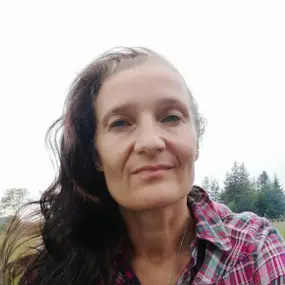
Author / Teacher / Choreographer / Therapist
Zuna has been dancing all her life. She considers dance as one of the potential expressions of her Taoist soul. She graduated from the Dance Conservatory and the University of Performing Arts in Bratislava, having several internships in Europe and Asia. In addition to dancing, she studied shiatsu at Shiatsu KI school and acupuncture at the University of Guang Ming Beijing in Prague.
Apart from her choreographic work for the Artyci Dance Company and other ensembles, Zuna is a sought-after teacher working in Bratislava (SK), Banská Bystrica (SK), Prague (CZ), Salzburg (A), Vienna (A), Leeds (UK), Freiburg (D), Wroclaw (PL), Poznan (PL), Bangkok (TH), Beijing and Hong Kong (CN).
She has been teaching for over 30 years, during which she developed a unique style of work with a human body, based on experience with the anatomy of the human body and the energy flowing within. She connects her dance knowledge with the universal principles of Taoism through her studies of Chinese medicine and Qigong, bringing to her students new information about movement intelligence. The qualities of Zuna´s teachings include a peaceful, sensitive and qualified approach to movement and body.
Zuna currently focuses primarily on Qigong and Neigong and their impact on the health and movement quality of performers.
Zuna is the author of two research projects Dance and Medicine and Dancing Qigong aimed at combining the philosophy of Taoism with the life of artists, especially in terms of promoting their health and improving their performance.
read Dance and Medicine… Read More
